
Good to know
Article summary
- From crown ornaments to the shapes of vessels, choosing one detail to examine in each object gives first-time visitors a focus.
- The horse-and-rider-shaped vessel in the Silla History Gallery is classified as a Gaya object. Distinguish the gallery’s name from each object’s period and culture.
- Follow your interests through the indoor objects in the Silla History Gallery, Silla Art Gallery and Wolji Gallery, and the Three-storey Stone Pagoda from Goseonsa Temple in the grounds.
On a first visit to the permanent exhibition, try choosing one detail to examine in each object. A crown’s upright ornaments and the armour on a pottery figure reveal the maker’s hand. A vessel modelled on a house and a stone inscribed with a pagoda’s history offer a glimpse of the wishes and records held in objects.
See ornaments and vessels in the Silla History Gallery, then explore Buddhist culture in the Silla Art Gallery. The Wolji Gallery brings together cultural objects found around Donggung Palace and Wolji Pond. Extend your visit to the stone pagoda in the grounds to consider small forms in the galleries alongside a large structure. Let what you want to see guide where you spend the most time.
01Best when You are curious about how ornaments are assembled
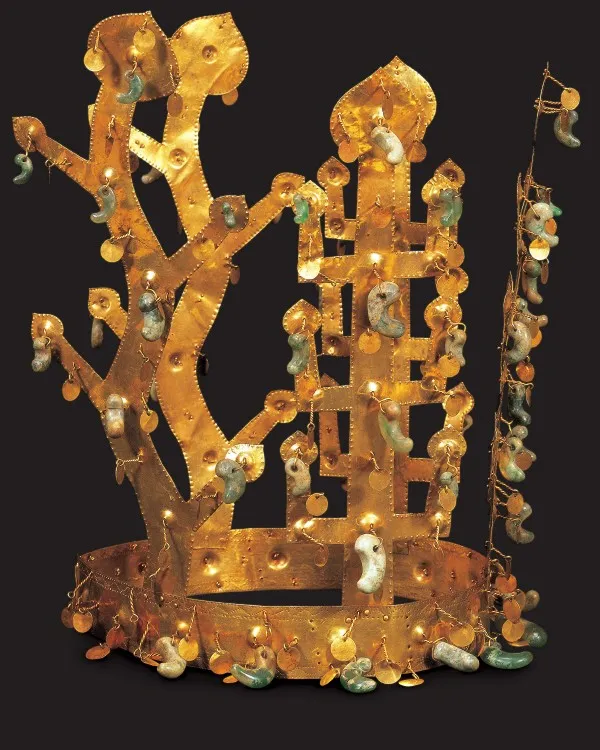
Gold Crown from Geumgwanchong (금관(금관총))
Silla gold crown · Height 27.5cm
- Price
- Free admission to the permanent exhibition
- Location
- Silla History Gallery, Gyeongju National Museum, 186 Iljeong-ro, Gyeongju-si
Choose this crown if you want to examine its ornaments one by one. Geumgwanchong takes its name from the discovery of this crown. Two shapes of upright ornament rise above the band: three with branches extending in opposite directions and two with slanting branches.
The branches extending at right angles form three tiers. Wide gaps between the stems and branches make each shape easy to trace. Rivets join the upright ornaments to the band. A pair of long pendants hangs below.
Contact and further details
02Best when Glass vessels and cultural exchanges interest you
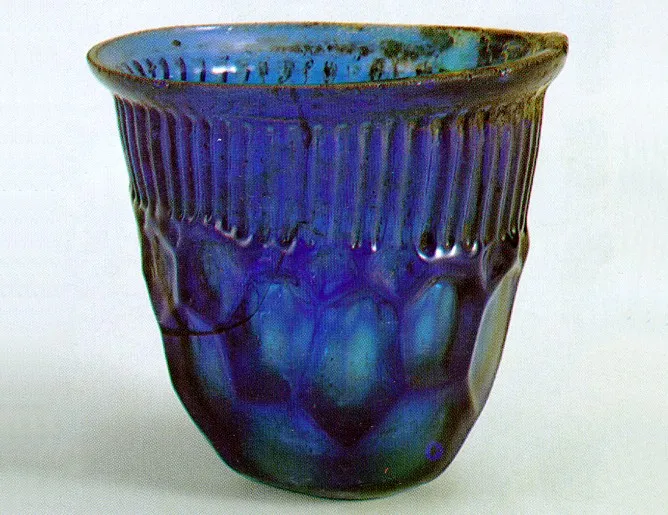
Glass Cup (유리제 잔)
Silla glass vessel · Height 7.4cm, width 7.3cm
- Price
- Free admission to the permanent exhibition
- Location
- Silla History Gallery, Gyeongju National Museum, 186 Iljeong-ro, Gyeongju-si
A small cup can prompt thoughts about Silla’s exchanges with the wider world. This Glass Cup is 7.4cm high and 7.3cm wide. Its similar height and width make the proportions of the body worth examining.
The museum connects glass vessels found in royal tombs with funerary culture. It discusses both locally made and imported examples. The phoenix-headed ewer and glass cups from Hwangnamdaechong are cited as examples that arrived via Eurasia and China.
Glass was used for both vessels and ornaments. The same material takes different forms according to its purpose.
Contact and further details
03Best when You want to examine a warrior’s and horse’s equipment
Gaya Horse-and-Rider-shaped Vessel (기마인물형토기(가야))
Gaya pottery vessel shaped as a rider and horse · Height 23.2cm

- Price
- Free admission to the permanent exhibition
- Location
- Silla History Gallery, Gyeongju National Museum, 186 Iljeong-ro, Gyeongju-si
Pause at this vessel if a warrior’s equipment interests you. It is a Gaya object displayed in the Silla History Gallery. It was donated by Yi Yang-seon, known by the pen name Gugeun.
The horse wears armour made of linked rectangular plates. The warrior also has a helmet and armour. He holds a spear in his right hand and a shield in his left. You can compare the equipment of rider and horse.
Two horn-shaped cups sit on the horse’s back, one on either side. The object combines the depiction of a warrior with the form of a vessel.
Contact and further details
04Best when You are curious about the form of old houses
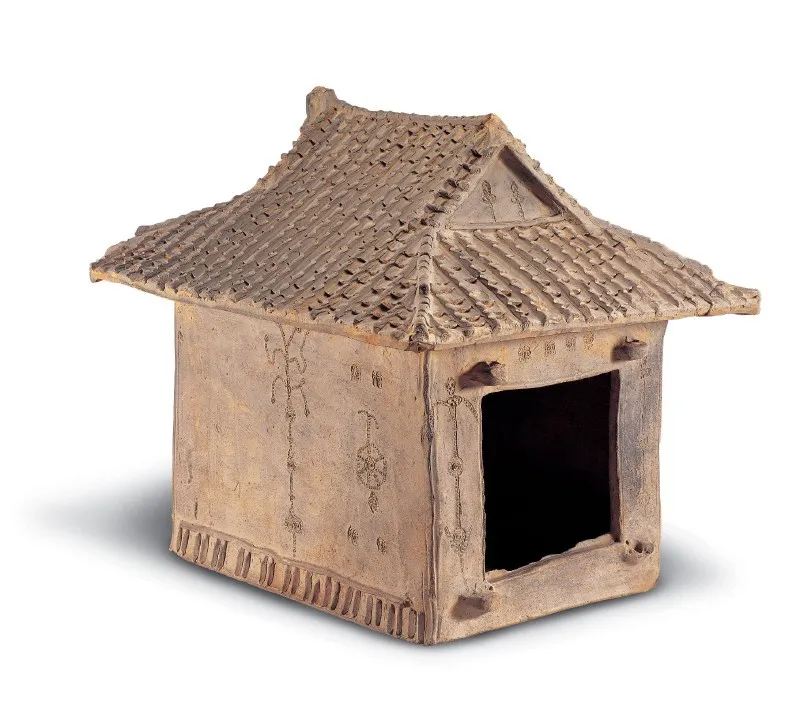
House-shaped Funerary Urn (집모양 뼈그릇)
Unified Silla house-shaped funerary urn · Height 43.3cm
- Price
- Free admission to the permanent exhibition
- Location
- Silla History Gallery, Gyeongju National Museum, 186 Iljeong-ro, Gyeongju-si
A house-shaped vessel can preserve architectural details. This example was found in Bukgun-dong, Gyeongju, and dates to the 8th century in the Unified Silla period. It depicts a hip-and-gable roof with neatly arranged tiles. Traces of a hinged door remain on the side.
The museum explains the wish expressed by the house shape: for the deceased to rest peacefully in a tiled-roof house. A container for bones thus takes the form of a dwelling.
Contact and further details
05Best when You want to read records preserved on objects
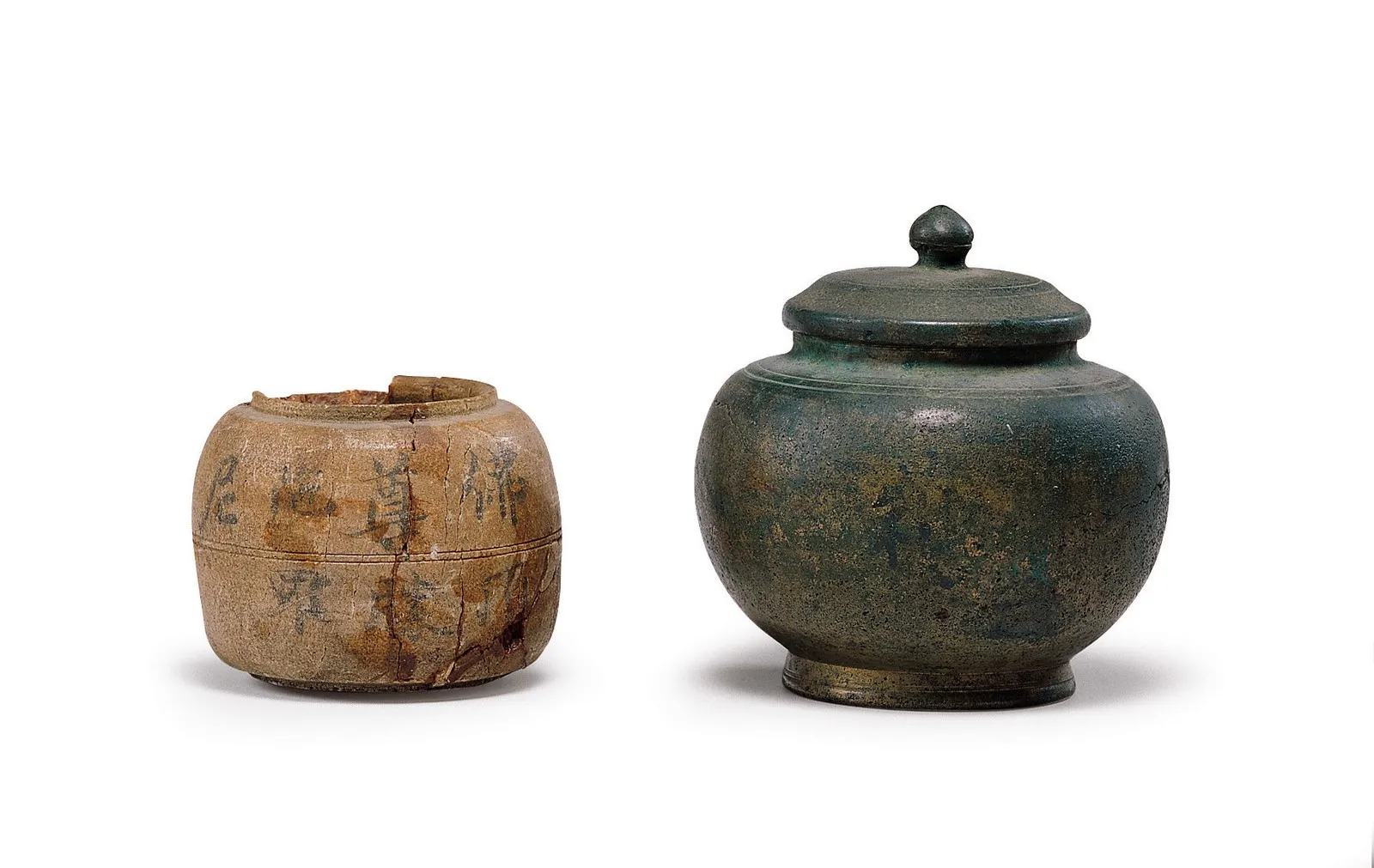
Sarira Reliquary Set (사리갖춤)
Unified Silla sarira reliquary set · Bronze jar, lidded soapstone container and pagoda inscription stones
- Price
- Free admission to the permanent exhibition
- Location
- Silla Art Gallery, Gyeongju National Museum, 186 Iljeong-ro, Gyeongju-si
Look at both the containers and the inscribed stones in the Sarira Reliquary Set. The pieces include a bronze jar, a lidded soapstone container and soapstone inscription stones. The stones record the history of a pagoda. The Buljeong Jonseung Dharani is written in ink on the outside of the soapstone container.
The Unified Silla inscription records the pagoda’s construction in 828 and relocation in 846. Another pagoda inscription records repairs during the late Joseon period. Choose this set if writing holds your attention longer than the shape of a vessel. The inscriptions carry the history of care for a single pagoda across different eras.
Contact and further details
06Best when You want to see a Buddhist story expressed through figures
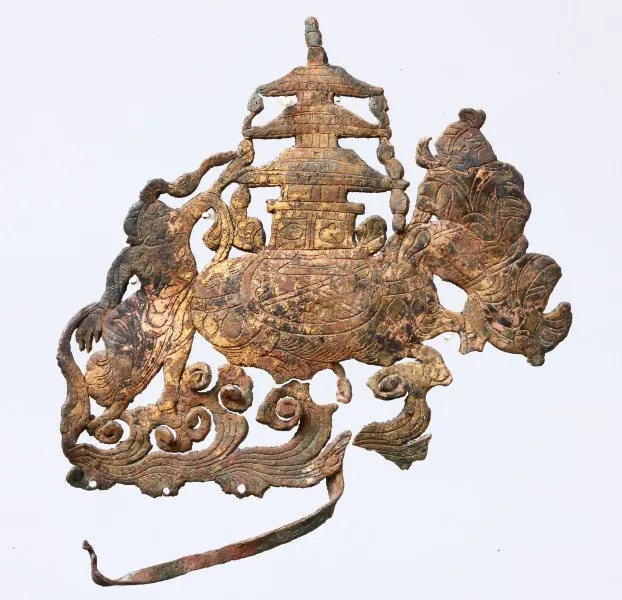
Horse Carrying a Three-storey Pagoda (삼층탑을 실은 말)
Unified Silla Buddhist figure · Height 8cm
- Price
- Free admission to the permanent exhibition
- Location
- Wolji Gallery, Gyeongju National Museum, 186 Iljeong-ro, Gyeongju-si
Here, a horse carries a three-storey pagoda instead of a warrior. This object in the Wolji Gallery is 8cm high. It includes a horse and pagoda, clouds, and figures at the front and rear. What accompanies the horse differs from the Gaya pottery vessel.
The museum interprets this as a scene of relics being divided and transported. It connects the scene with the story after Shakyamuni Buddha entered nirvana. The horse rides on clouds, with an auspicious aura depicted around its mouth. The figures at the front and rear resemble divine guardians of Buddhist teachings.
Contact and further details
07Best when You want to examine a stone pagoda’s structure
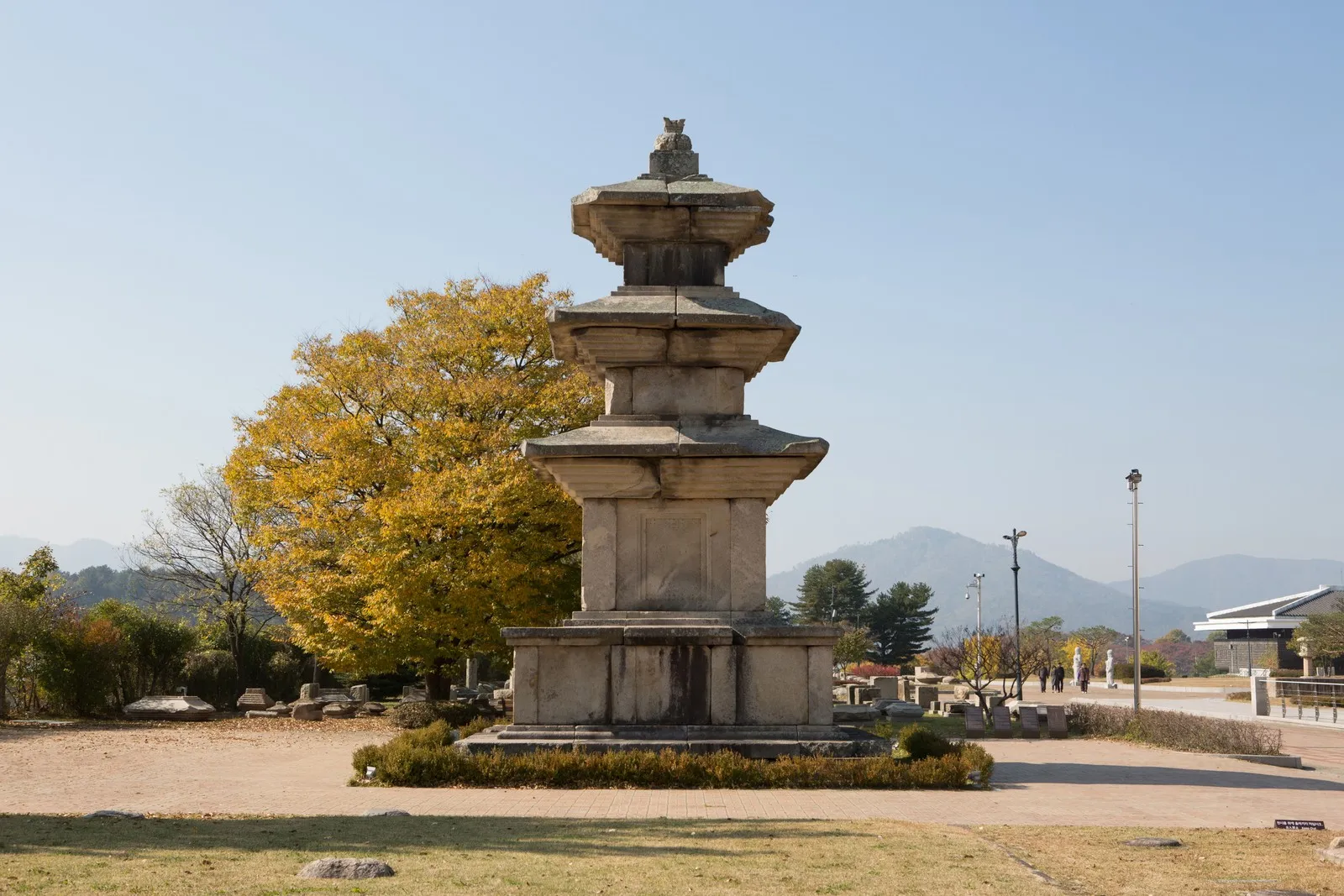
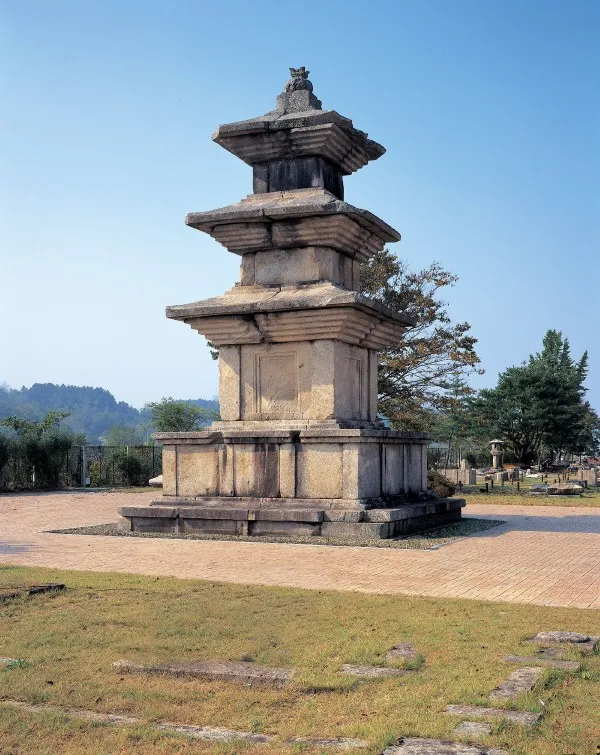
Three-storey Stone Pagoda from Goseonsa Temple (고선사 삼층석탑)
Unified Silla three-storey stone pagoda · Height 10.2m
- Price
- Free admission to the permanent exhibition
- Location
- Outdoor Exhibition Area, Gyeongju National Museum, 186 Iljeong-ro, Gyeongju-si
Head into the grounds to examine how a large structure fits together. The Three-storey Stone Pagoda from Goseonsa Temple in the outdoor exhibition stands 10.2m high. Stone pieces were fitted together to form a two-tier base and a three-storey body.
Door shapes are carved into all four faces of the first-storey body stone. Small holes used to attach gilt-bronze plates and other fittings also remain. This object suits visitors who want to see both its height and the details carved into the stone.
The museum describes it as an early example of the standard Unified Silla stone pagoda style. It also mentions the east and west three-storey stone pagodas at Gameunsa Temple. Comparing it with a pagoda depicted in a small sculpture gives a sense of this stone pagoda’s scale.
Contact and further details
Compare two options
Choose two options to compare their features and practical details.
| Spec | Gold Crown from Geumgwanchong (금관(금관총)) | Glass Cup (유리제 잔) | Gaya Horse-and-Rider-shaped Vessel (기마인물형토기(가야)) | House-shaped Funerary Urn (집모양 뼈그릇) | Sarira Reliquary Set (사리갖춤) | Horse Carrying a Three-storey Pagoda (삼층탑을 실은 말) | Three-storey Stone Pagoda from Goseonsa Temple (고선사 삼층석탑) |
|---|---|---|---|---|---|---|---|
| Best when | You are curious about how ornaments are assembled | Glass vessels and cultural exchanges interest you | You want to examine a warrior’s and horse’s equipment | You are curious about the form of old houses | You want to read records preserved on objects | You want to see a Buddhist story expressed through figures | You want to examine a stone pagoda’s structure |
| Price | Free admission to the permanent exhibition | Free admission to the permanent exhibition | Free admission to the permanent exhibition | Free admission to the permanent exhibition | Free admission to the permanent exhibition | Free admission to the permanent exhibition | Free admission to the permanent exhibition |
| Location | Silla History Gallery, Gyeongju National Museum, 186 Iljeong-ro, Gyeongju-si | Silla History Gallery, Gyeongju National Museum, 186 Iljeong-ro, Gyeongju-si | Silla History Gallery, Gyeongju National Museum, 186 Iljeong-ro, Gyeongju-si | Silla History Gallery, Gyeongju National Museum, 186 Iljeong-ro, Gyeongju-si | Silla Art Gallery, Gyeongju National Museum, 186 Iljeong-ro, Gyeongju-si | Wolji Gallery, Gyeongju National Museum, 186 Iljeong-ro, Gyeongju-si | Outdoor Exhibition Area, Gyeongju National Museum, 186 Iljeong-ro, Gyeongju-si |
| Watch out for | — | — | — | — | — | — | Outdoors; inaccessible on museum closure days |
Before you decide
Choosing in more detail
- If you want to compare materials within one gallery — see the Gold Crown from Geumgwanchong and the Glass Cup together. Both are in the Silla History Gallery, where you can compare the forms of metal ornaments and glass vessels.
- If you are curious about different ways of depicting the same animal — pair the Gaya Horse-and-Rider-shaped Vessel with the Horse Carrying a Three-storey Pagoda. One combines a horse with a warrior and cups; the other uses a pagoda and clouds to express a Buddhist story.
- If you want to connect small forms with a large structure — see the House-shaped Funerary Urn and the Three-storey Stone Pagoda from Goseonsa Temple. Compare the scale and purpose of the house-shaped container indoors and the stone pagoda in the grounds.
- If you want to follow several eras through one object — spend time with the Sarira Reliquary Set. Distinguish which inscription stone records the pagoda’s construction, relocation or repair.
- If you visit on a scheduled gallery closure day — focus on the outdoor exhibition and the Three-storey Stone Pagoda from Goseonsa Temple. Save the indoor objects for a day when the galleries are open.
The galleries close on the second Monday of March, June, September and December, while the gardens and outdoor exhibition area remain open as usual. On museum closure days—1 January, Seollal and Chuseok—the outdoor exhibition is also inaccessible.
FAQ
- 1How much does admission to Gyeongju National Museum’s permanent exhibition cost?
Admission to the permanent exhibition is free. Paid special exhibitions are excluded from the museum’s free admission policy.
- 2What is the latest admission time at Gyeongju National Museum?
Regular opening hours are 10:00–18:00, with admission closing 30 minutes before closing time. On Saturdays from March–October, the museum stays open until 20:00. Plan to enter by 17:30 on regular days or 19:30 on extended-opening days.
- 3Can I bring photography equipment or drinks into the galleries?
Photography using flash, camera supports or selfie sticks, as well as commercial photography, is prohibited. Bringing food or drinks into the galleries and consuming them inside are also restricted. Visitors are instructed to leave drinks that are difficult to seal on the storage rack.
Research notes
Research date 13 October 2026 · Sources Gyeongju National Museum’s permanent exhibition listings, individual object descriptions, visitor information and news Viewing criteria Form and function, gallery, and details to examine · Numbers Identify the objects featured
Was this column useful?
Comments 0
Be the first to comment.